
We were on the ground at the 2026 Volta ao Algarve. From the Vilamoura time trial to the sprint in Lagos and the decisive summit finish at Alto do Malhão. Not for all five days though. Turns out temporarily relocating to the Algarve to follow the peloton full-time did not make it through the bosses approval.
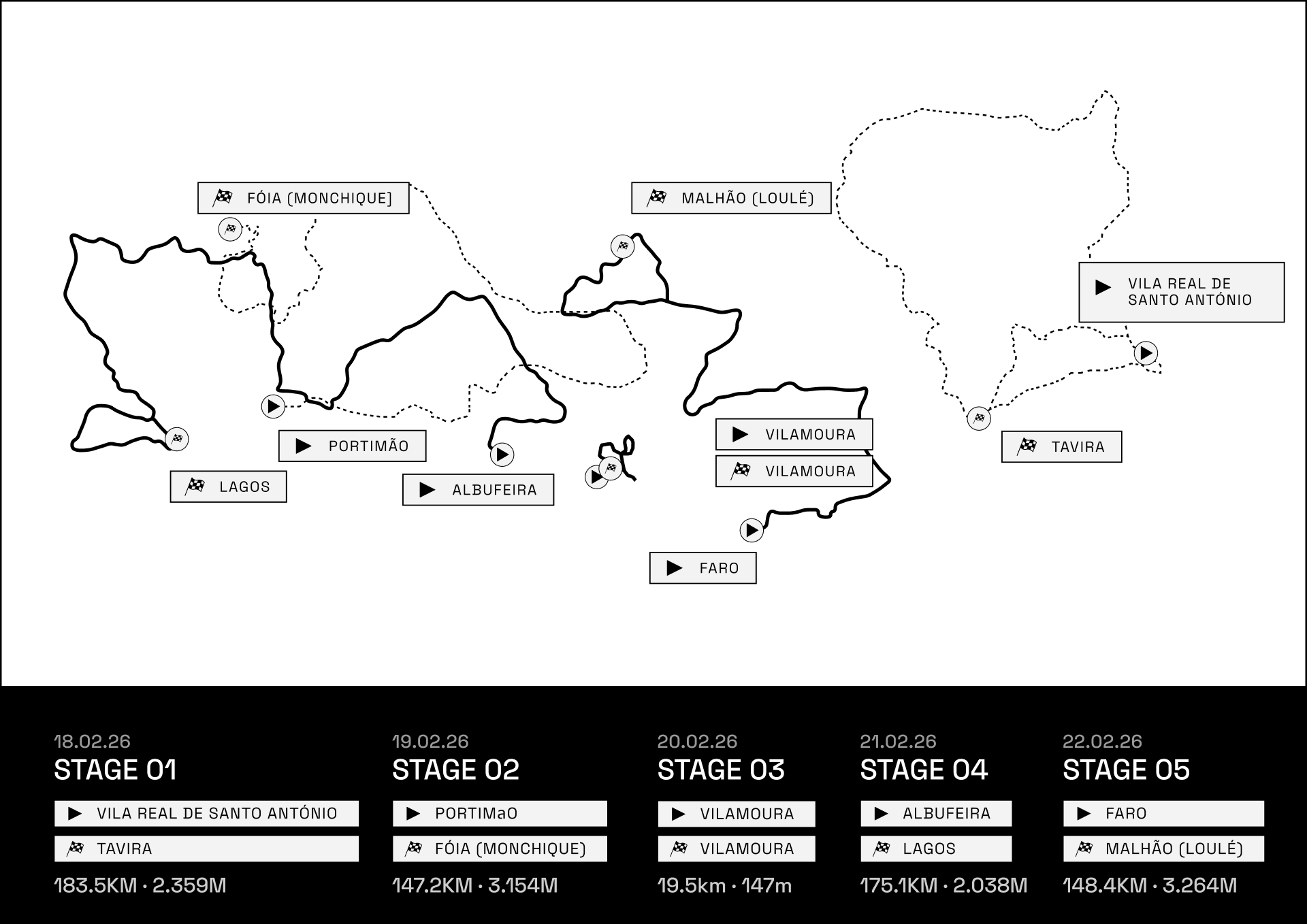
Held from 18 to 22 February 2026, the 52nd edition covered 674 kilometres of varied terrain. Filippo Ganna powered to victory in the Stage 3 time trial. Paul Magnier won the sprint in Lagos on Stage 4. And Juan Ayuso closed the show on Alto do Malhão, taking both the stage and the overall classification ahead of Paul Seixas, with João Almeida rounding out the podium.
We may have missed two stages, but we were there when it mattered.
This is how it went.
VILAMOURA
Time trial day has a different texture... It is less chaotic than a sprint day. It feels contained, almost intimate. An individual time trial strips the race back to its most essential form: rider, machine and clock.
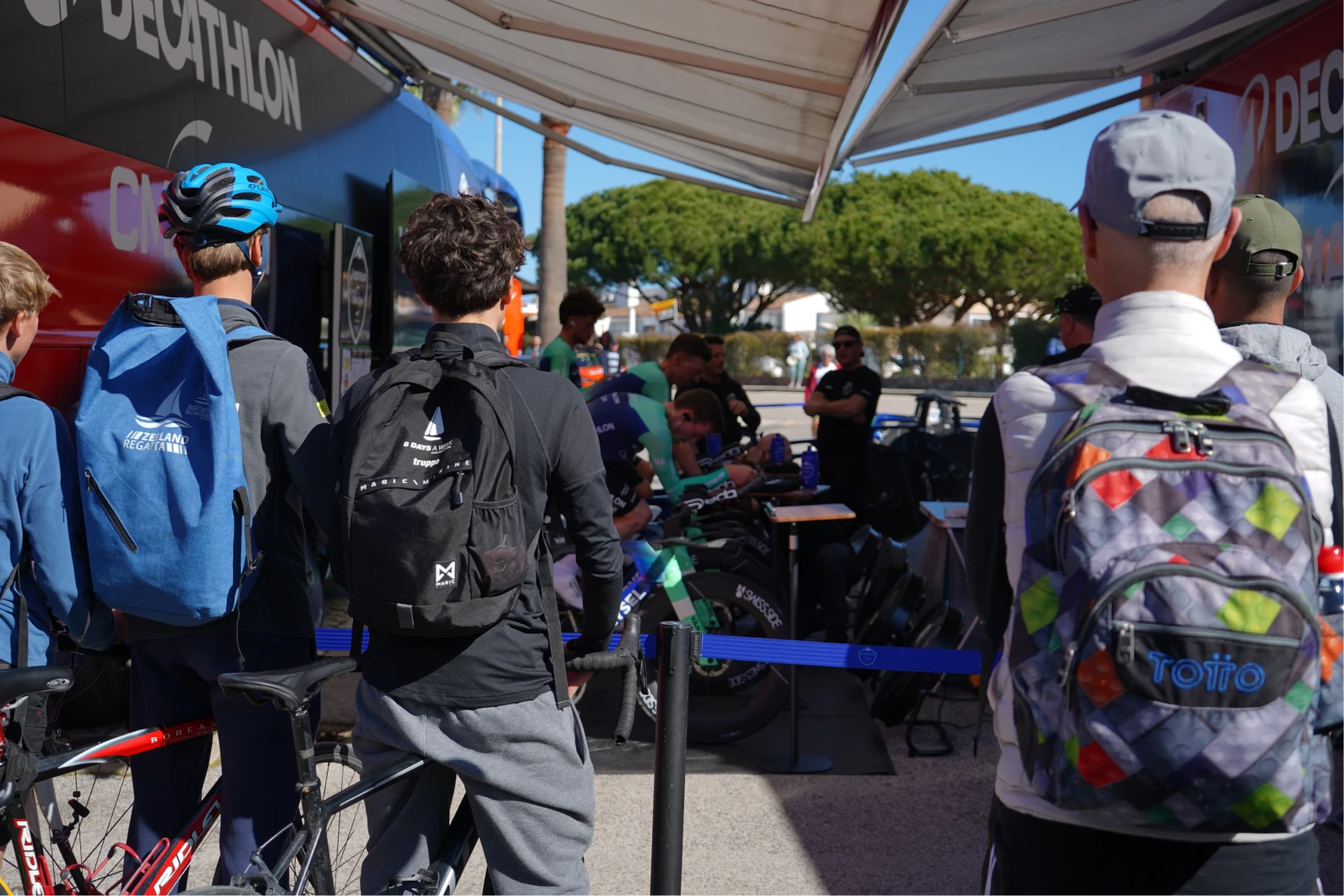
In the team parking area that morning, everything moves with quiet precision. Riders roll steadily on their home trainers. The metallic click of gears shifting under load. A soigneurs hand on a shoulder. A mechanic adjusting a visor by a few millimetres. No wasted movements. No unnecessary words.
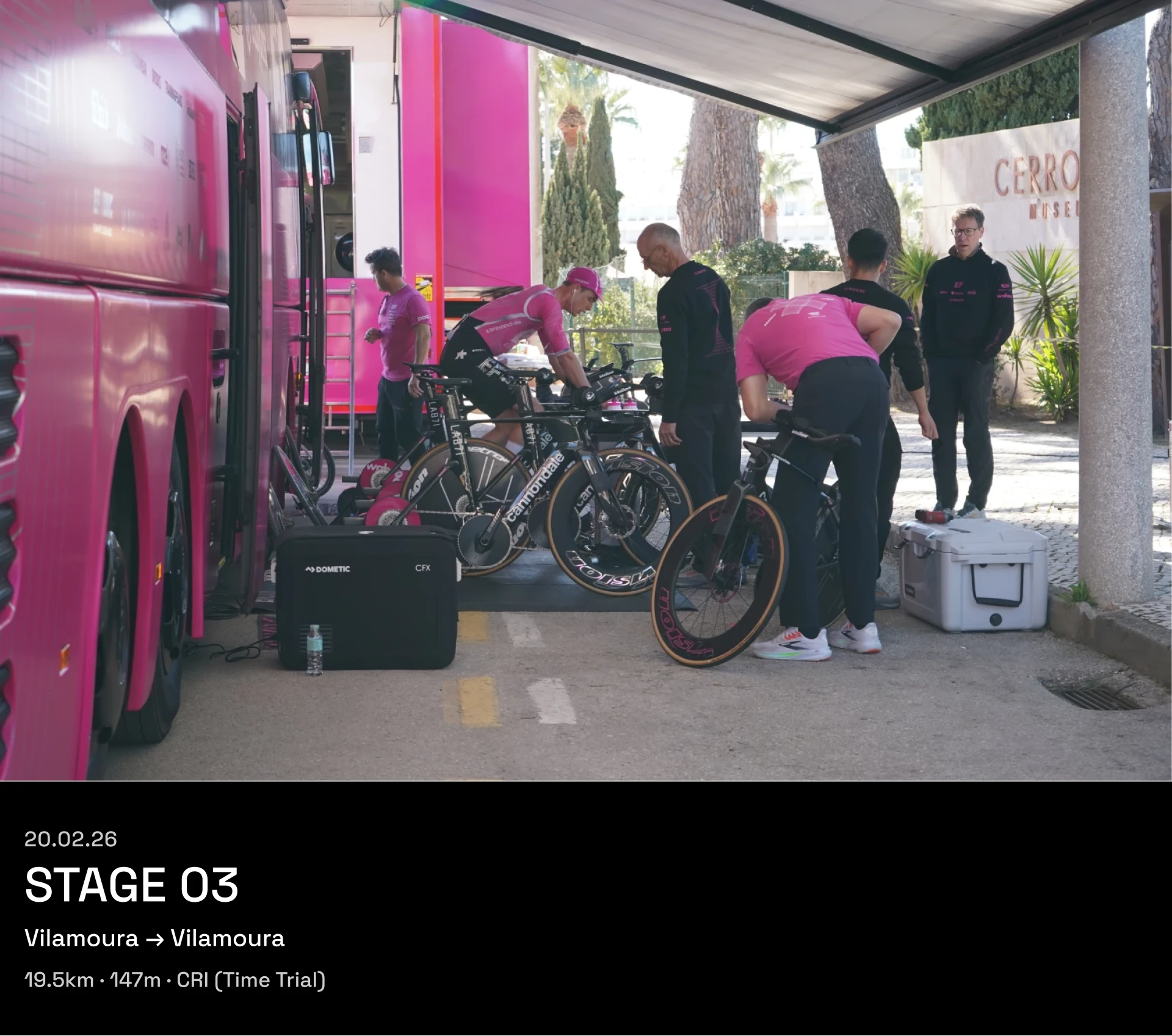
There is something vulnerable about watching them warm up. No peloton to hide in. No teammate to close a gap. Just an effort that will be measured down to the second. You see riders close their eyes mid-interval, rehearsing the course in their minds. Roundabouts. Crosswinds. That slight rise after the turnaround. They know exactly where they can gain two seconds. They know exactly where they can lose five.
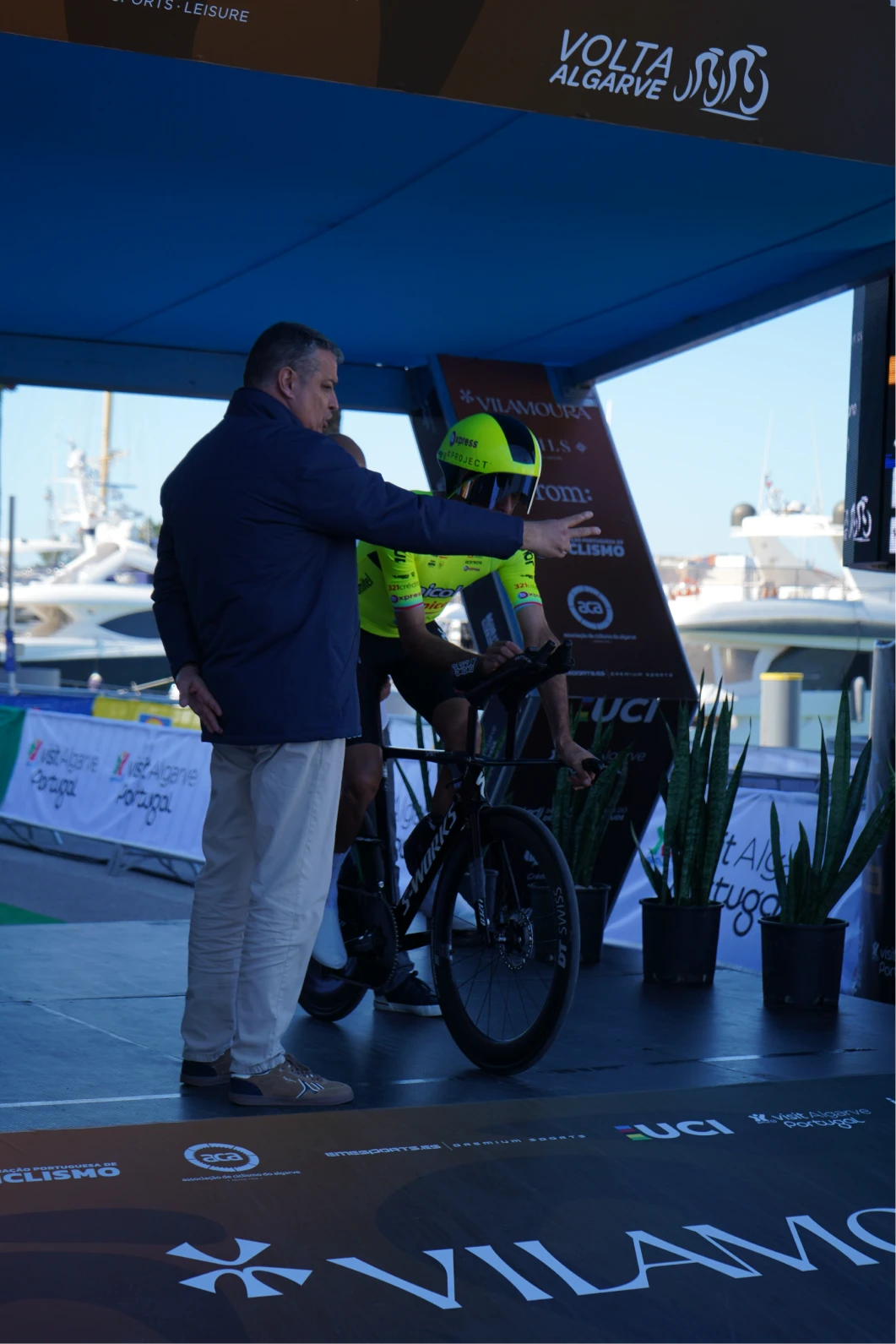
When the first rider rolls down the ramp, the crowd leans forward. The countdown echoes. Five. Four. Three. Two. One. And then silence for half a heartbeat before the explosive acceleration. Carbon flexes. A bike surges forward. It is a violent, beautiful effort. In seconds they are already in the aero position, shoulders still, legs driving.
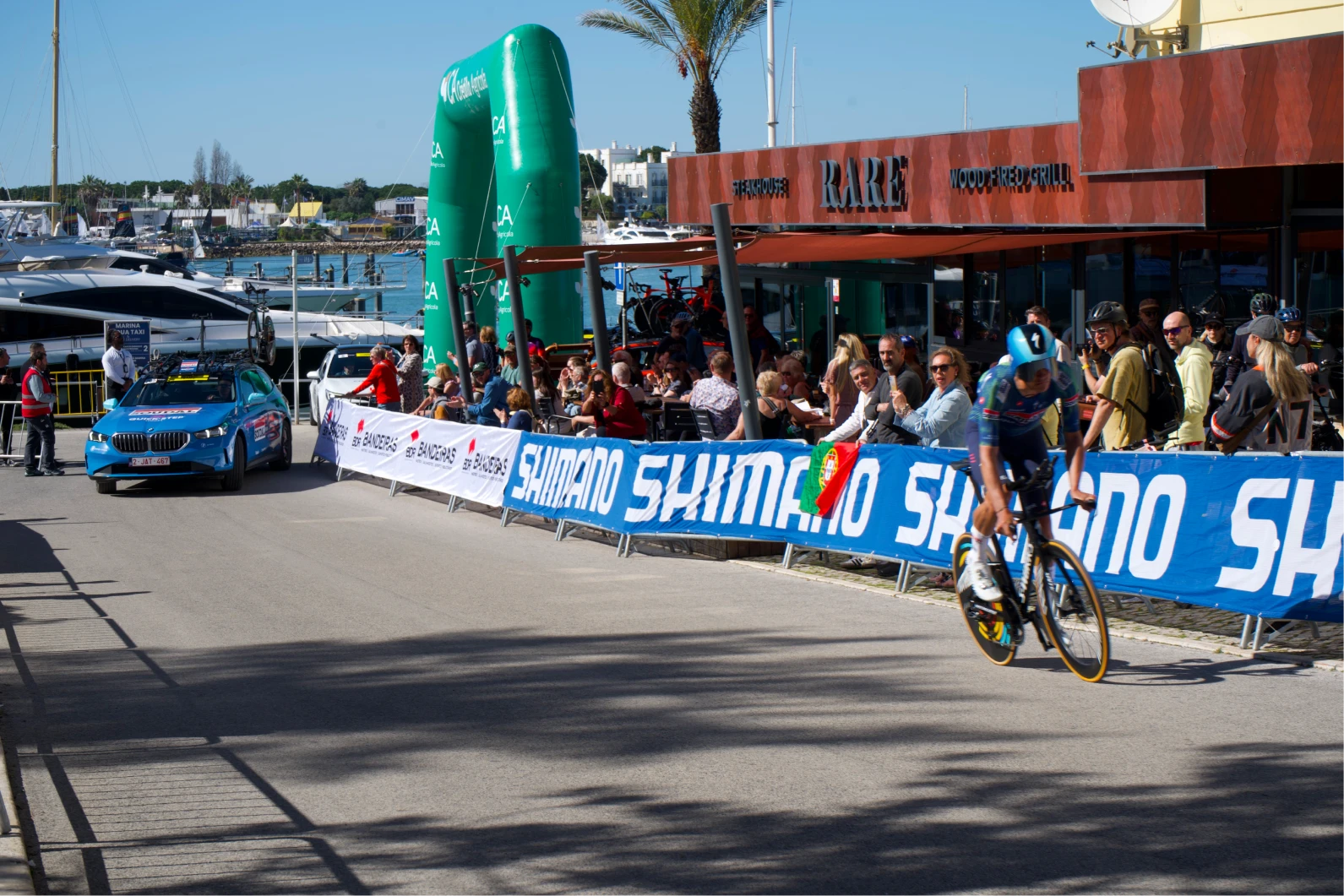
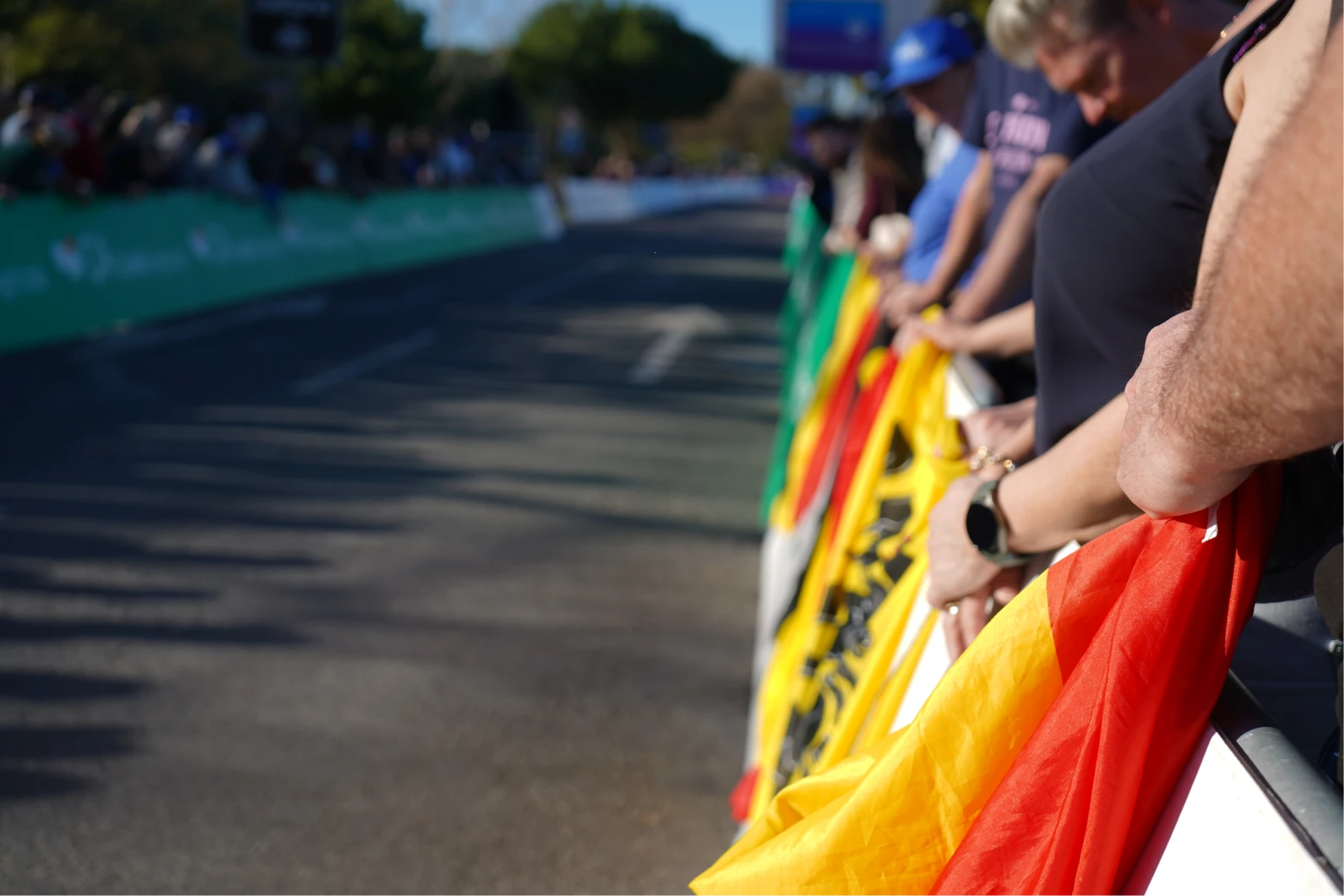
Out on course, the soundscape shifts again. Motorbikes glide just ahead of the favourites. Spectators line the barriers, clapping, each rider treated as his own event. There is no waiting for a peloton. Each minute brings a new protagonist.
And that is what makes this kind of stage so tense. It is invisible drama. No attacks. No breakaways to calculate. Just numbers ticking down on screens. Time gaps whispered between journalists. Riders finishing and collapsing over their handlebars, asking immediately, “How much?”
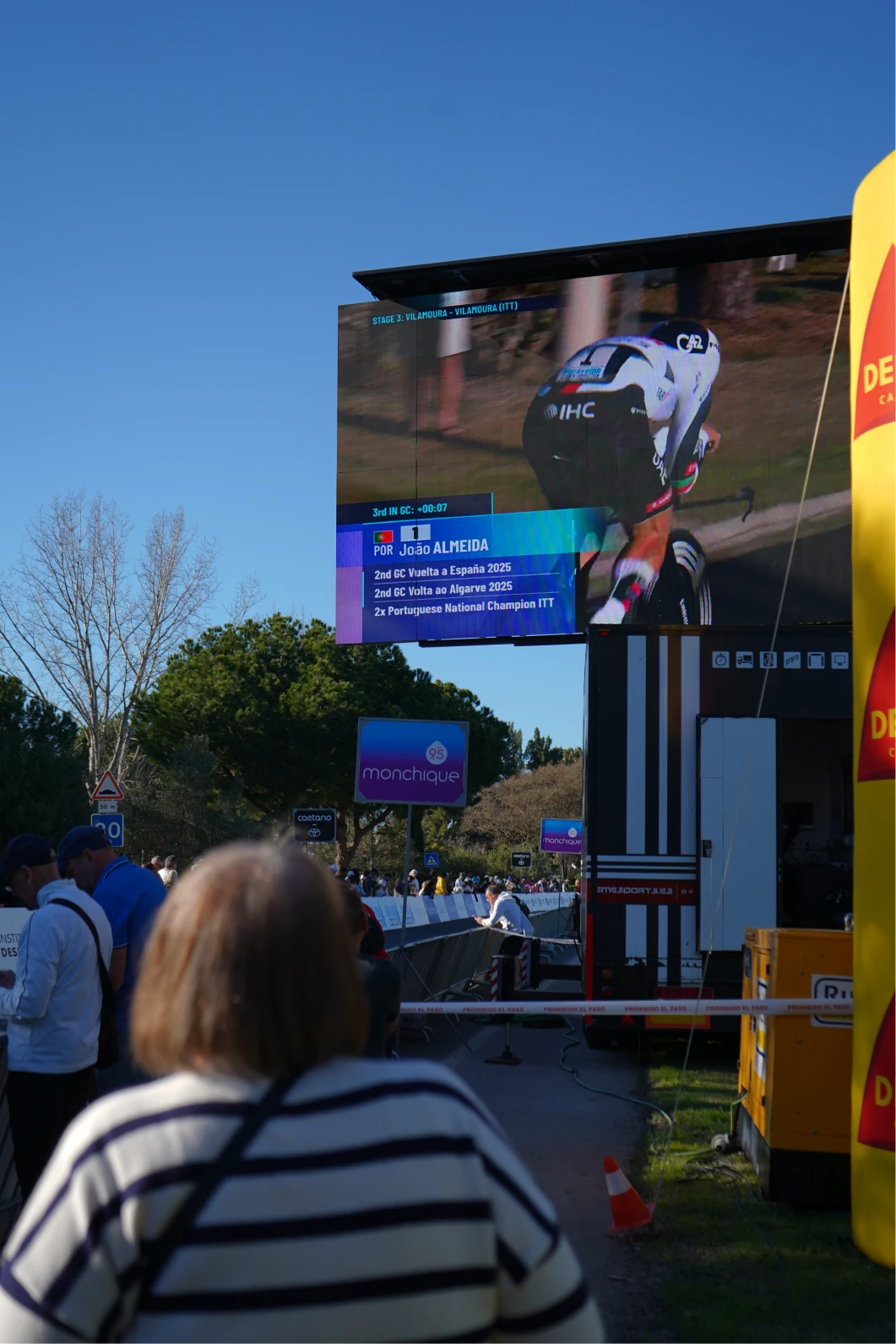
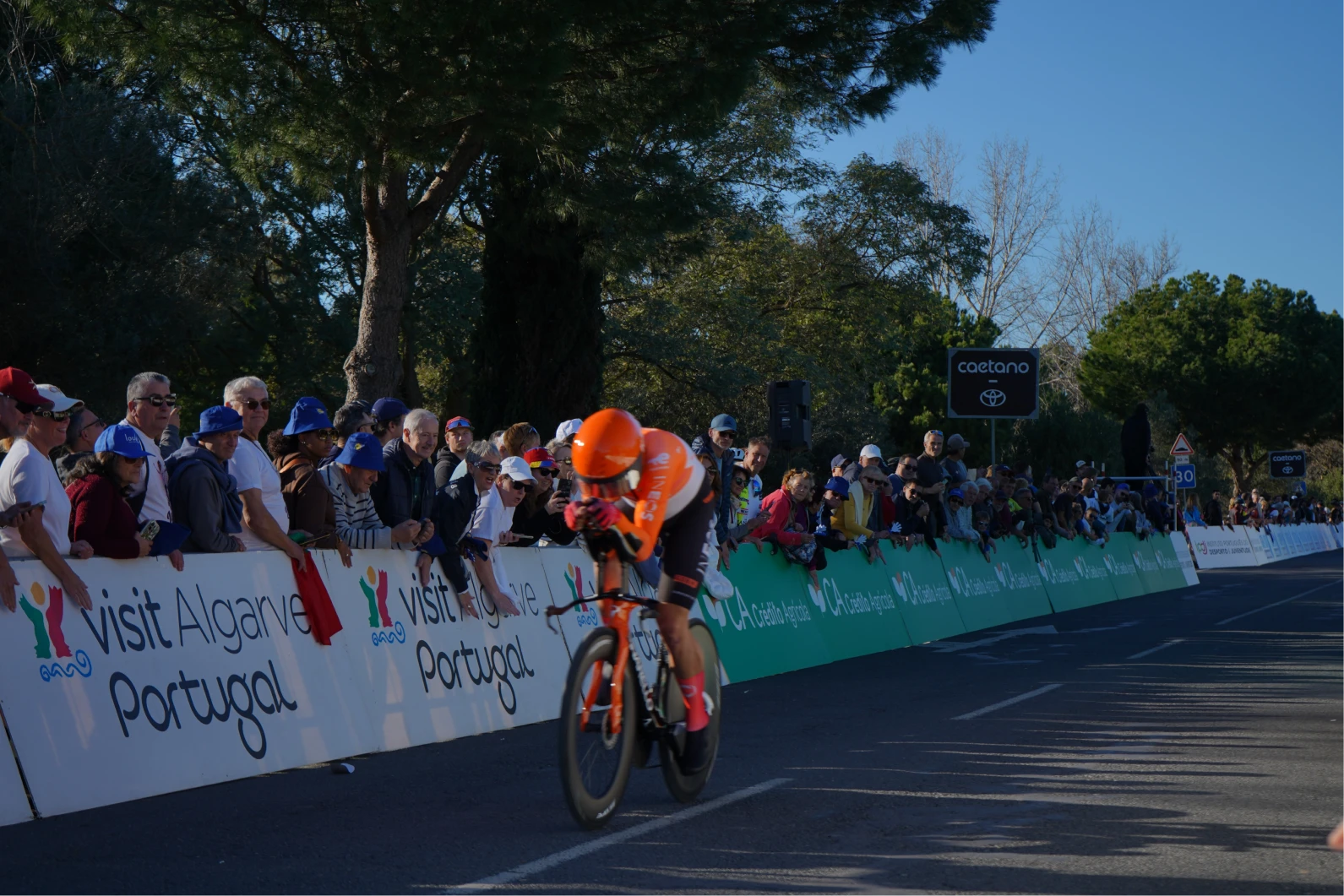
The finish area feels like a laboratory of fatigue. Some riders stare at the results board in disbelief. Others nod quietly, already thinking about Malhão. A good time trial does not win the Algarve outright, but it shapes everything that follows. It draws the lines. It decides who must attack and who must defend.
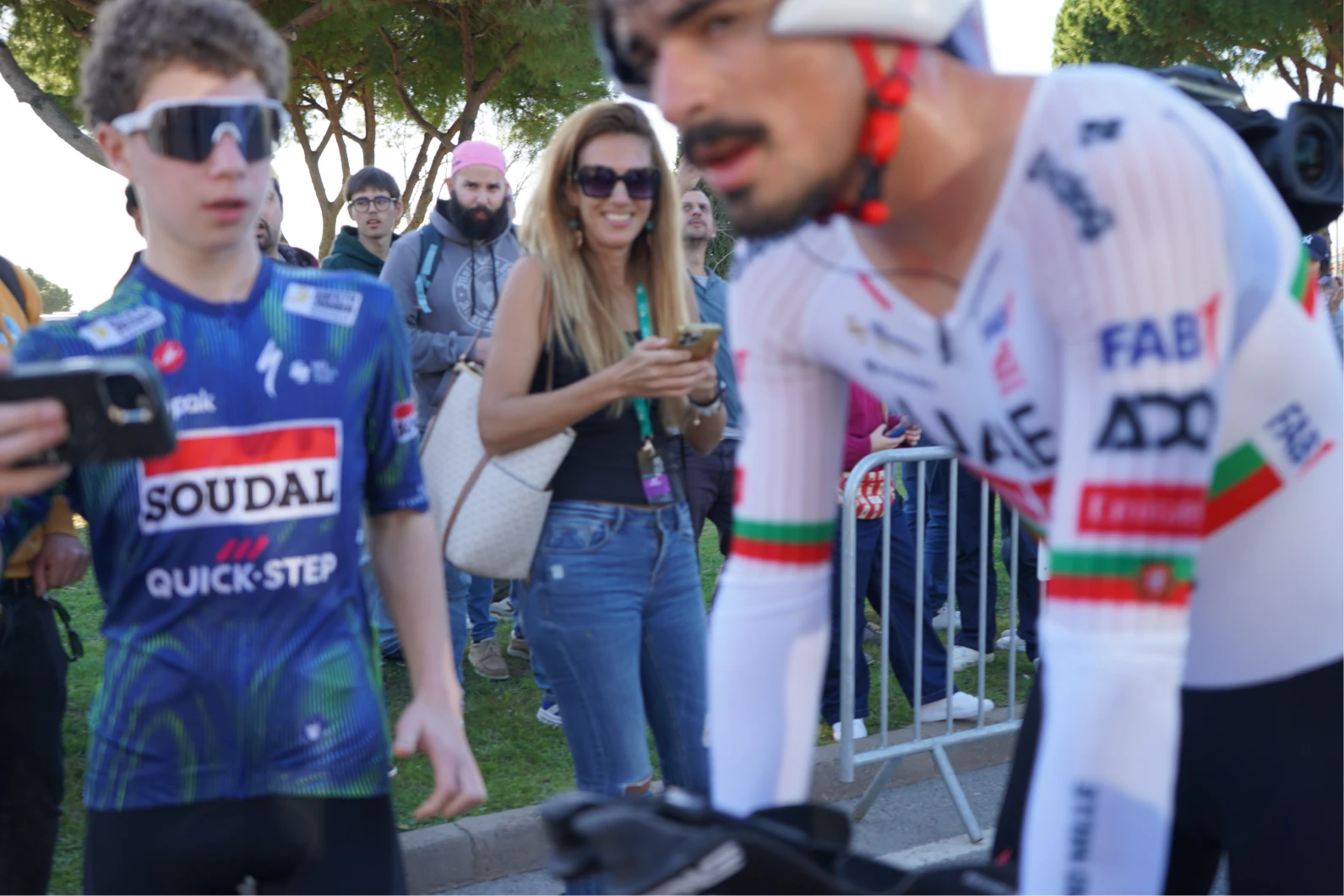
LAGOS
Saturday stage feels different from the moment the neutral flag drops. After the time trial, the peloton is whole again. Voices return to the race. Radios crackle constantly. Domestiques move up and down the bunch with urgency. It is a day that looks simple on paper, but everyone knows how deceptive that simplicity can be.
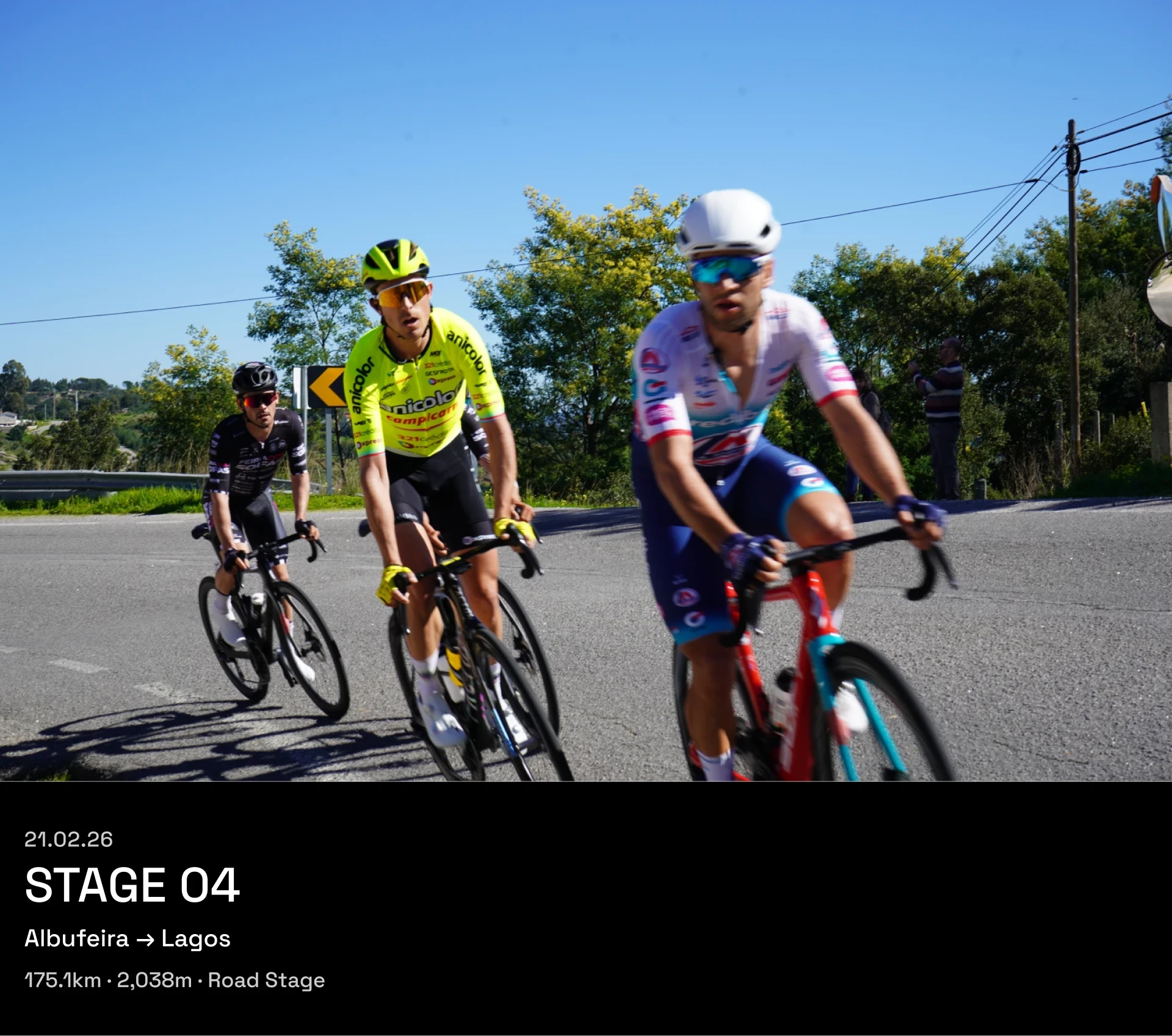
From Albufeira toward Lagos, exposed to the Atlantic wind, you can sense the nervousness in the peloton long before the finale. Shoulders brush. Elbows hold position. The sound is sharper here. Chains under tension. Team cars accelerating and braking behind the convoy.
Sprint stages carry a specific kind of tension. It builds slowly, then compresses into chaos over the final kilometres.
Planning your own adventure?


ALTO DO MALHÃO
And then comes Alto do Malhão.
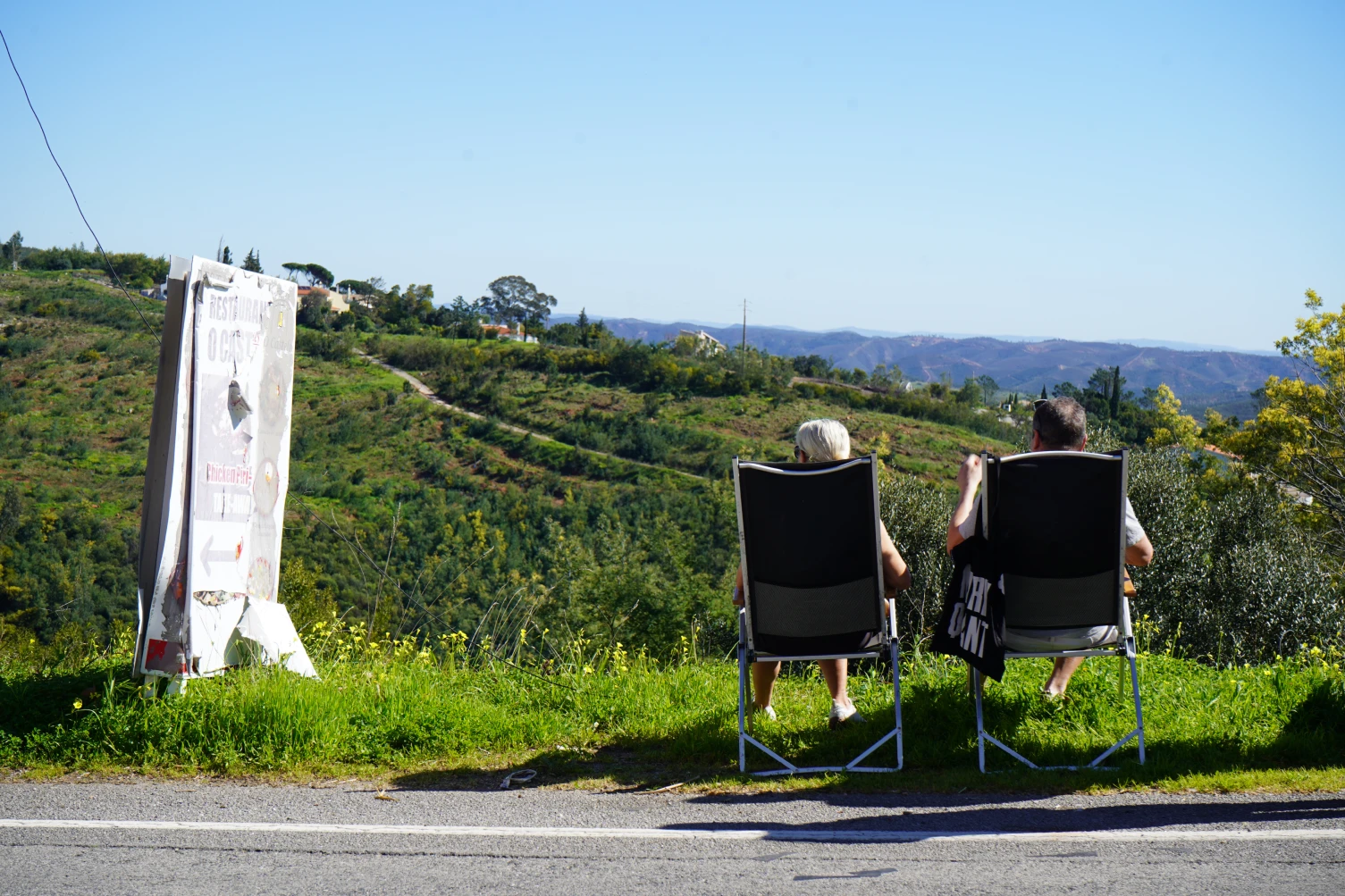
The atmosphere there feels less like a sport event and more like a ritual. People arrive the night before. Caravans line the narrow road up the climb, parked door to door to secure the perfect viewing point. Portable chairs unfold. Flags appear. Grills are lit. Smoke drifts through trees. There is music, dancing, there are beers opened before noon.
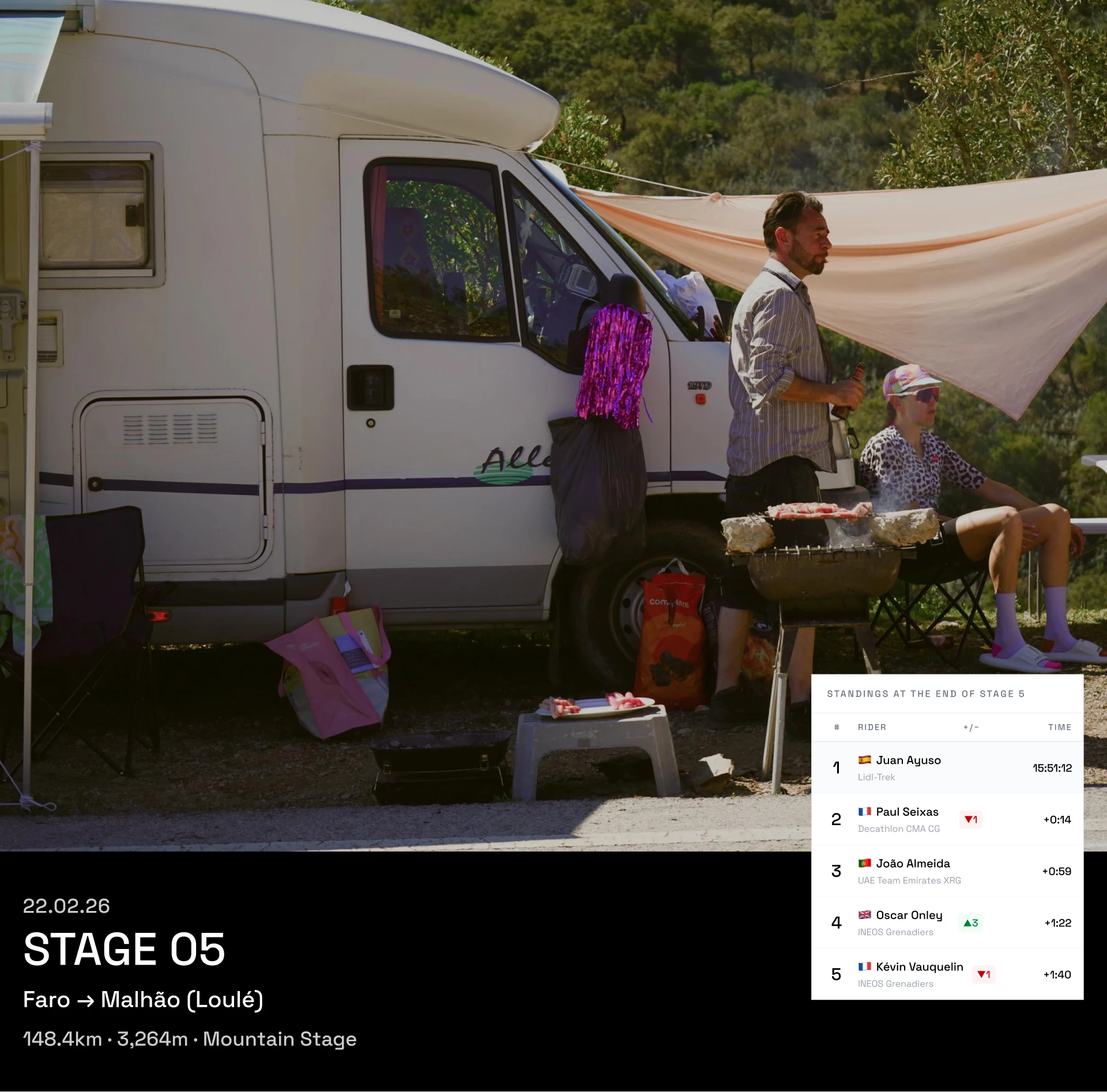
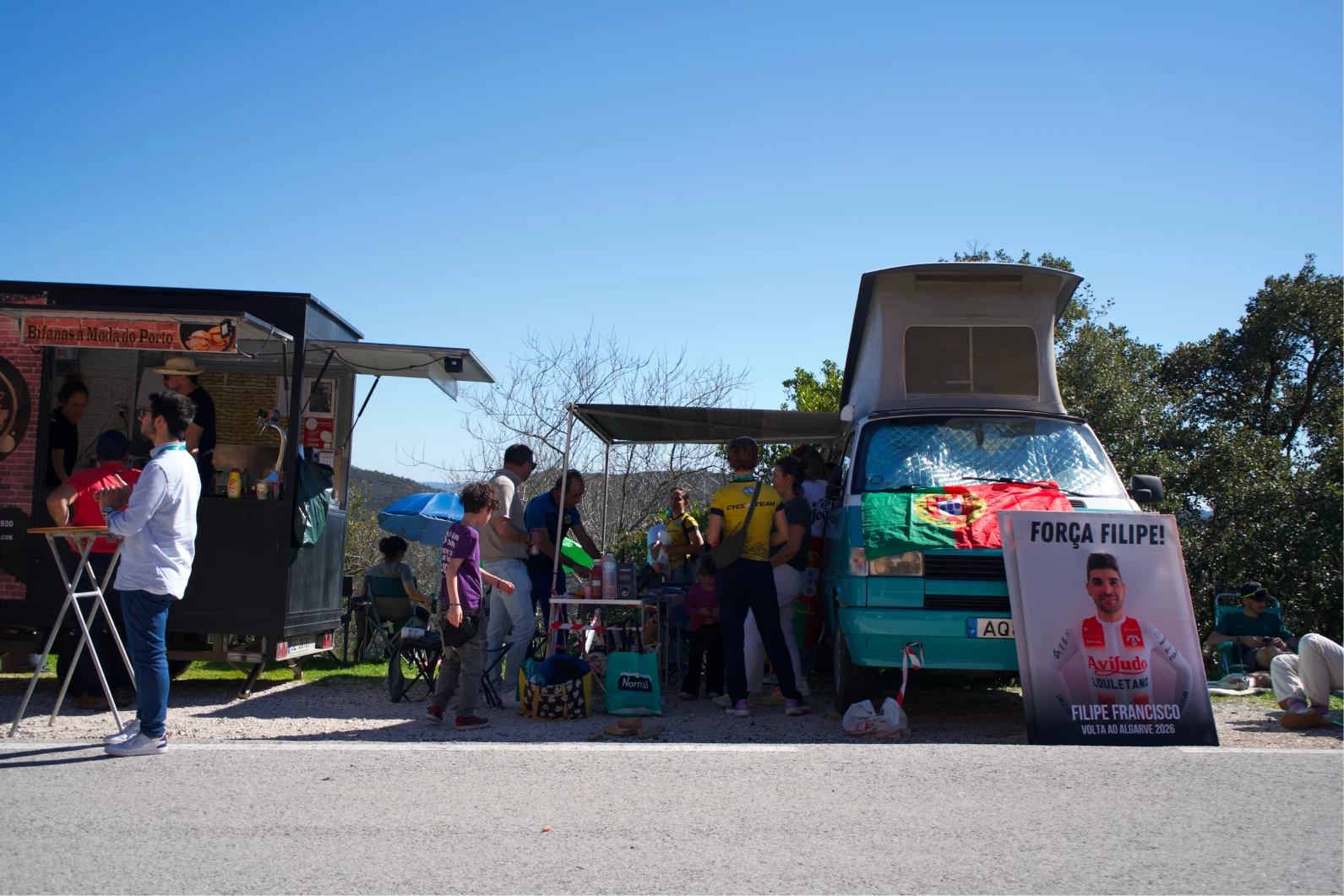
By midday, the climb feels like a living corridor.
Amateur cyclists test themselves against the same gradient the professionals will face hours later. They grind upward through the noise and the crowd treats them as if they are in the race. Strangers shout encouragement. Someone runs beside them for a few meters. Others offer food they prepared that morning, slices of bread, pieces of chouriço. Plastic cups of beer are extended into tired hands. Take it. For the final push. It is generosity without thinking.
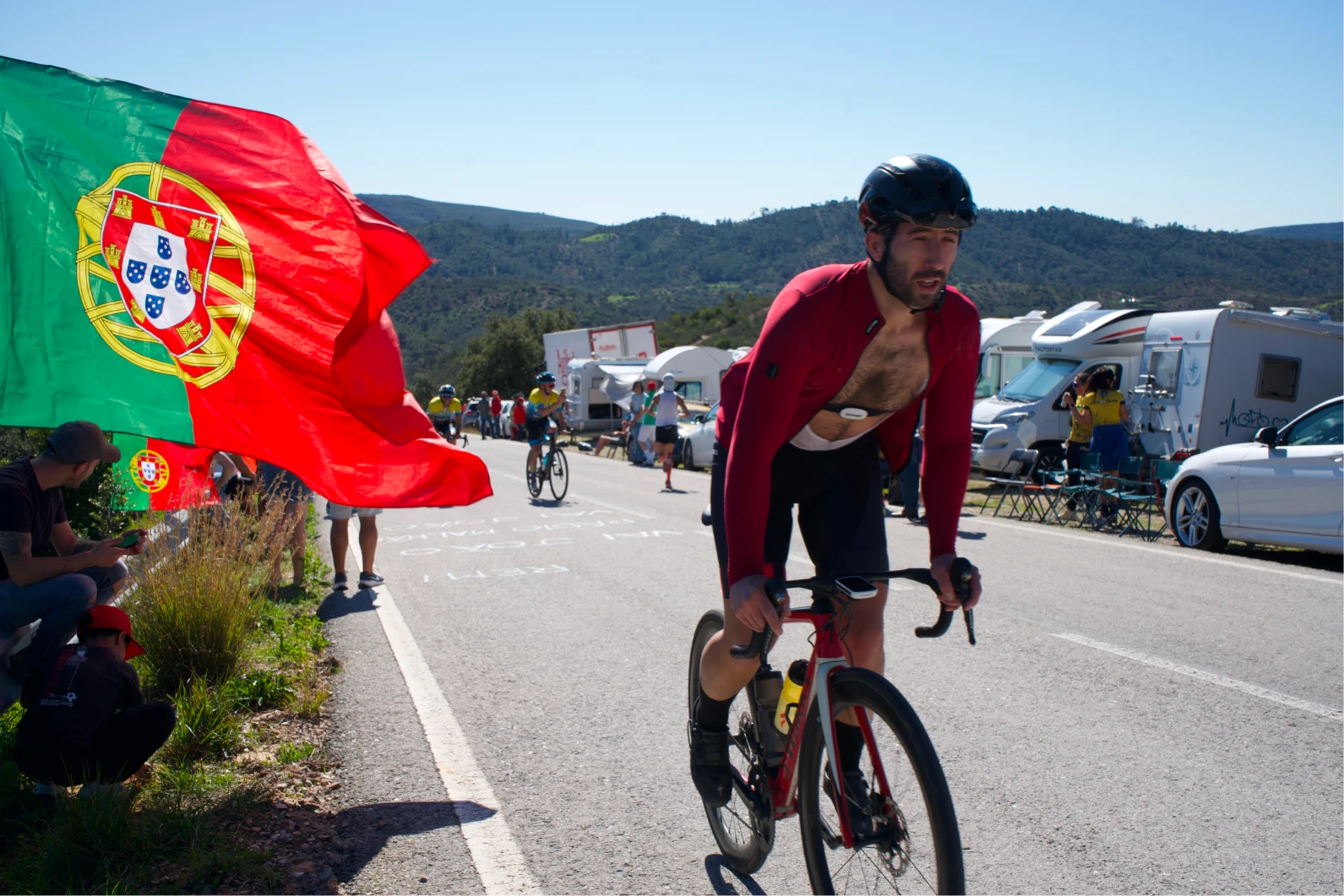
When the race approaches, the sound arrives first. The helicopter. Then the distant echo of sirens. Then the wave of anticipation moving uphill from corner to corner. People step closer to the tarmac. Phones are raised. Flags tighten in the wind.
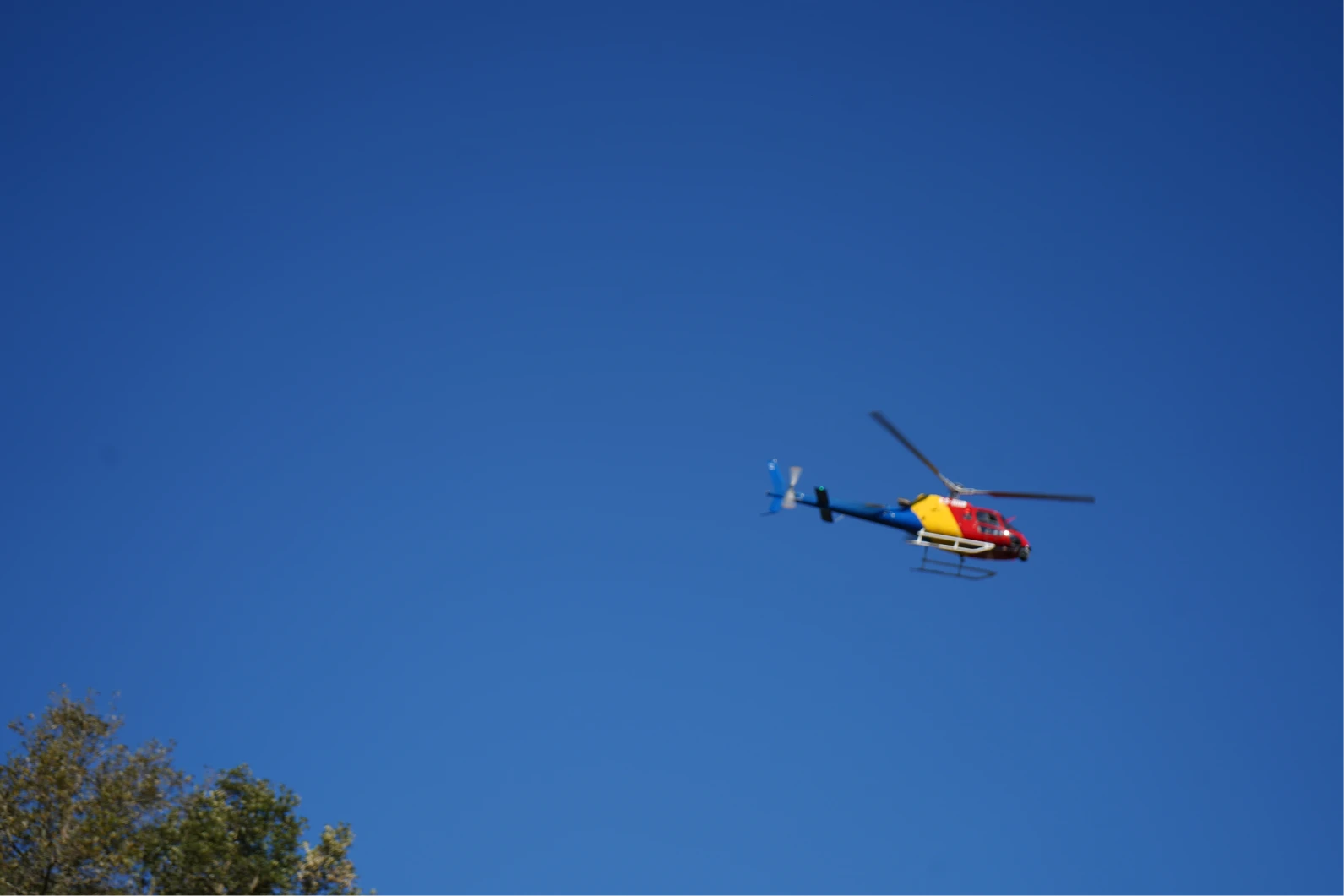
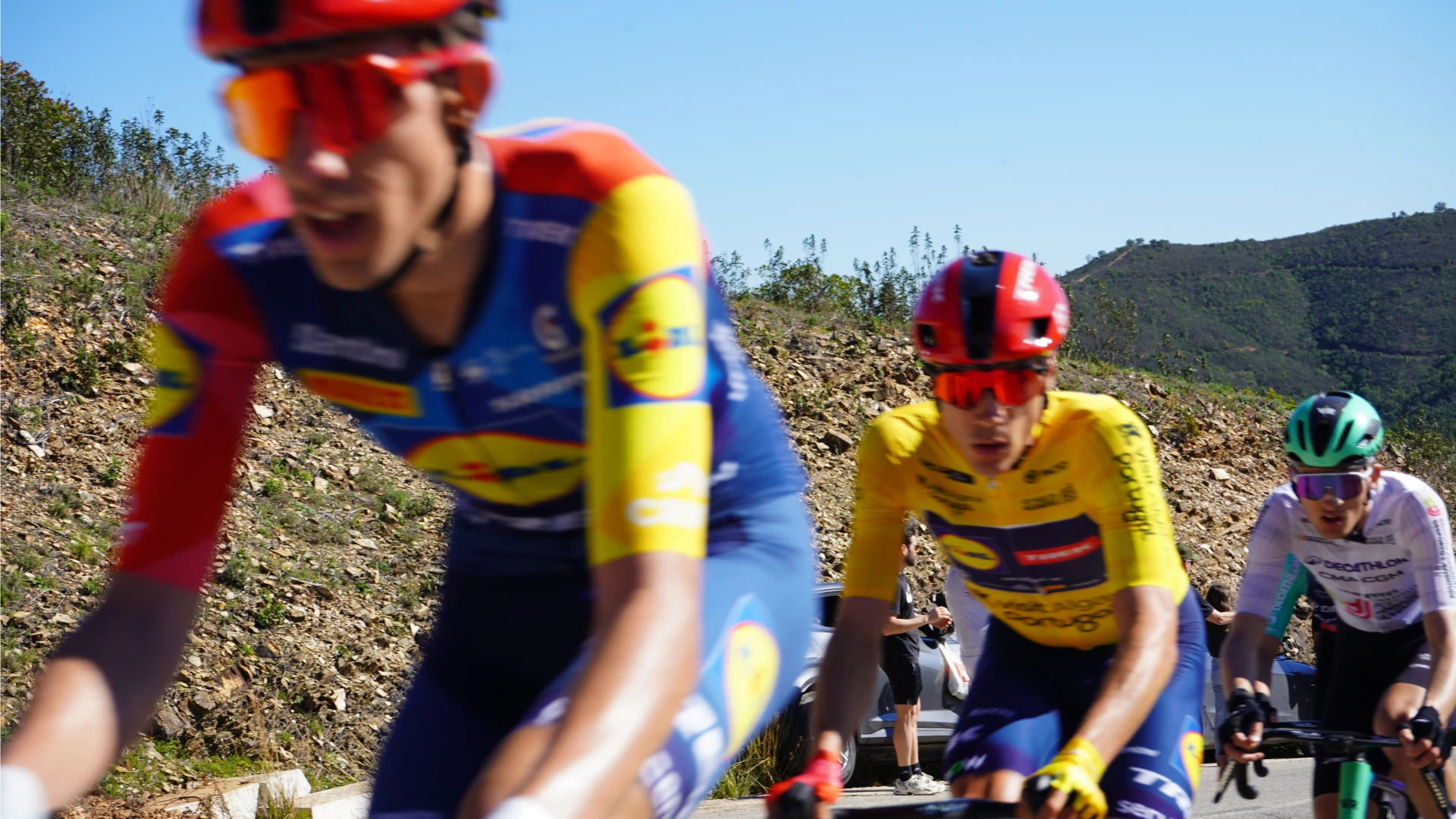
The first rider appears suddenly, emerging from the bend below in a flash of colour. Ten seconds. Maybe less. He passes, breathing violently, eyes fixed on the road. The crowd erupts as if he has won the stage. Then silence again. Then the next rider. From the first to the last, every single one is cheered.
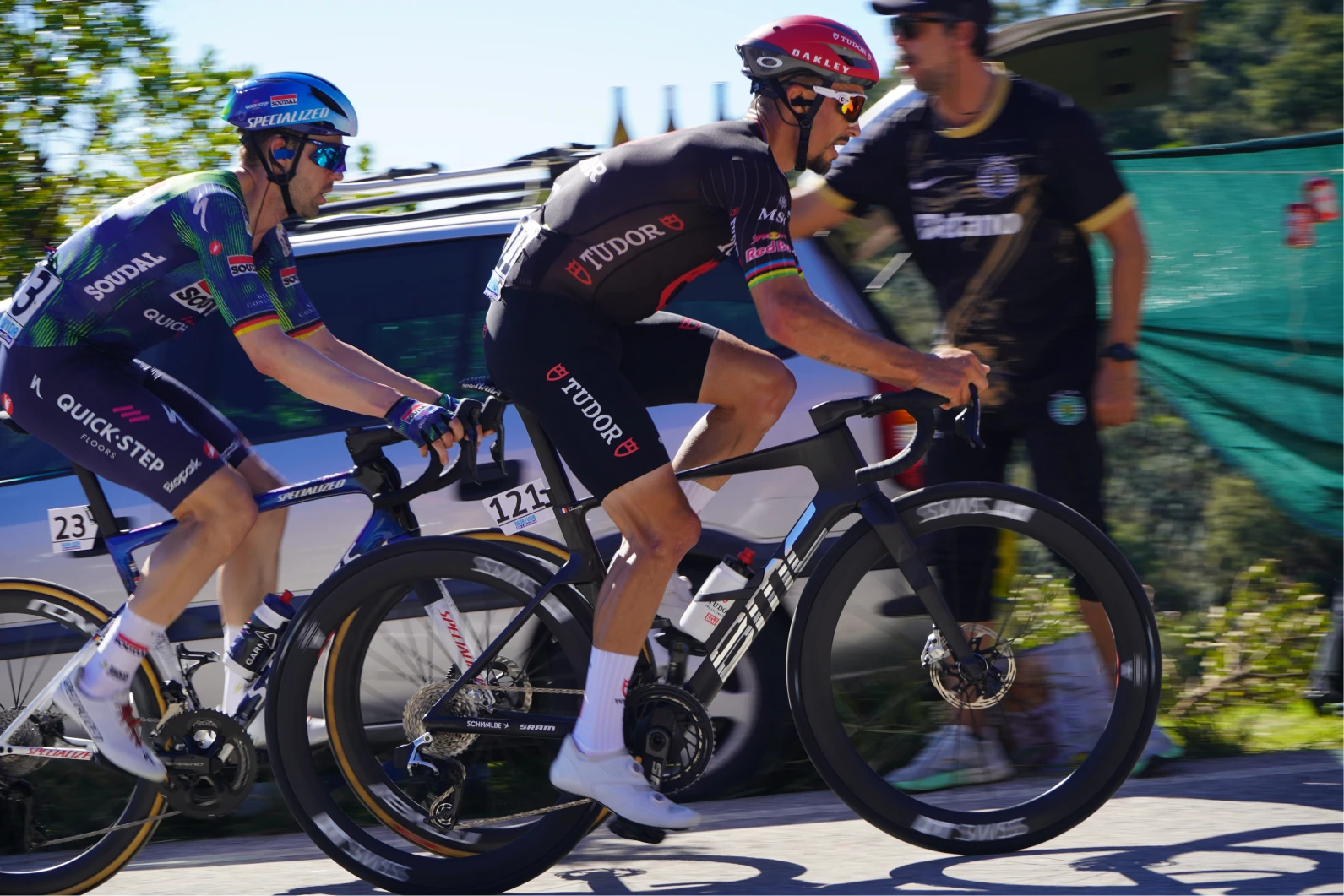
In the finishes and on the climbs, another sound rises above everything else: Portuguese voices shouting one name. João Almeida. It is not just cheering, it is insistence. It is pride. It rolls through the crowd like a wave each time he passes.
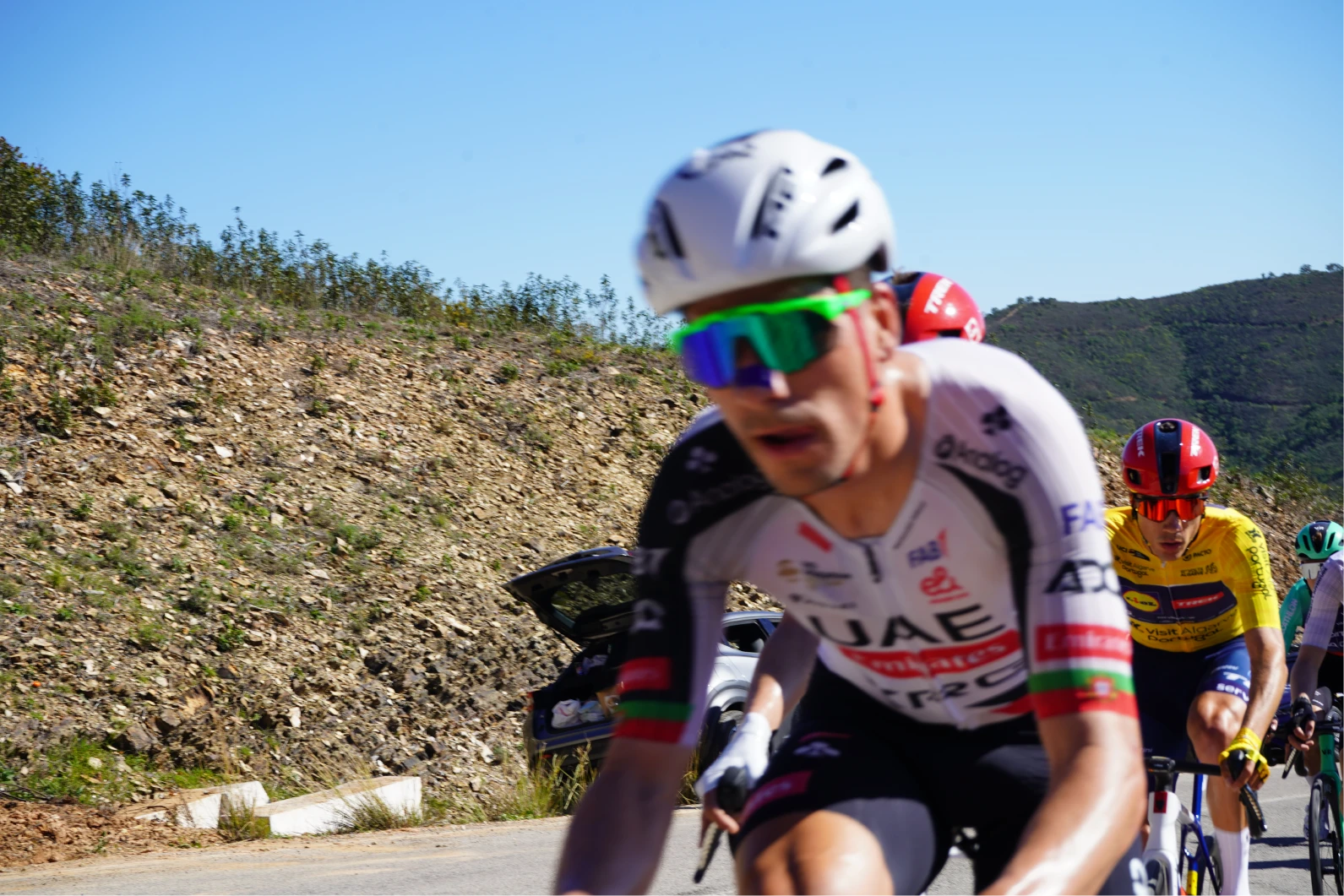
But it is the final rider who receives something different. The applause grows louder, more human. The crowd understands what it means to suffer without glory. They shout harder. They clap longer. They stay for him.
Then the broom wagon arrives behind him. The signal that it is over.
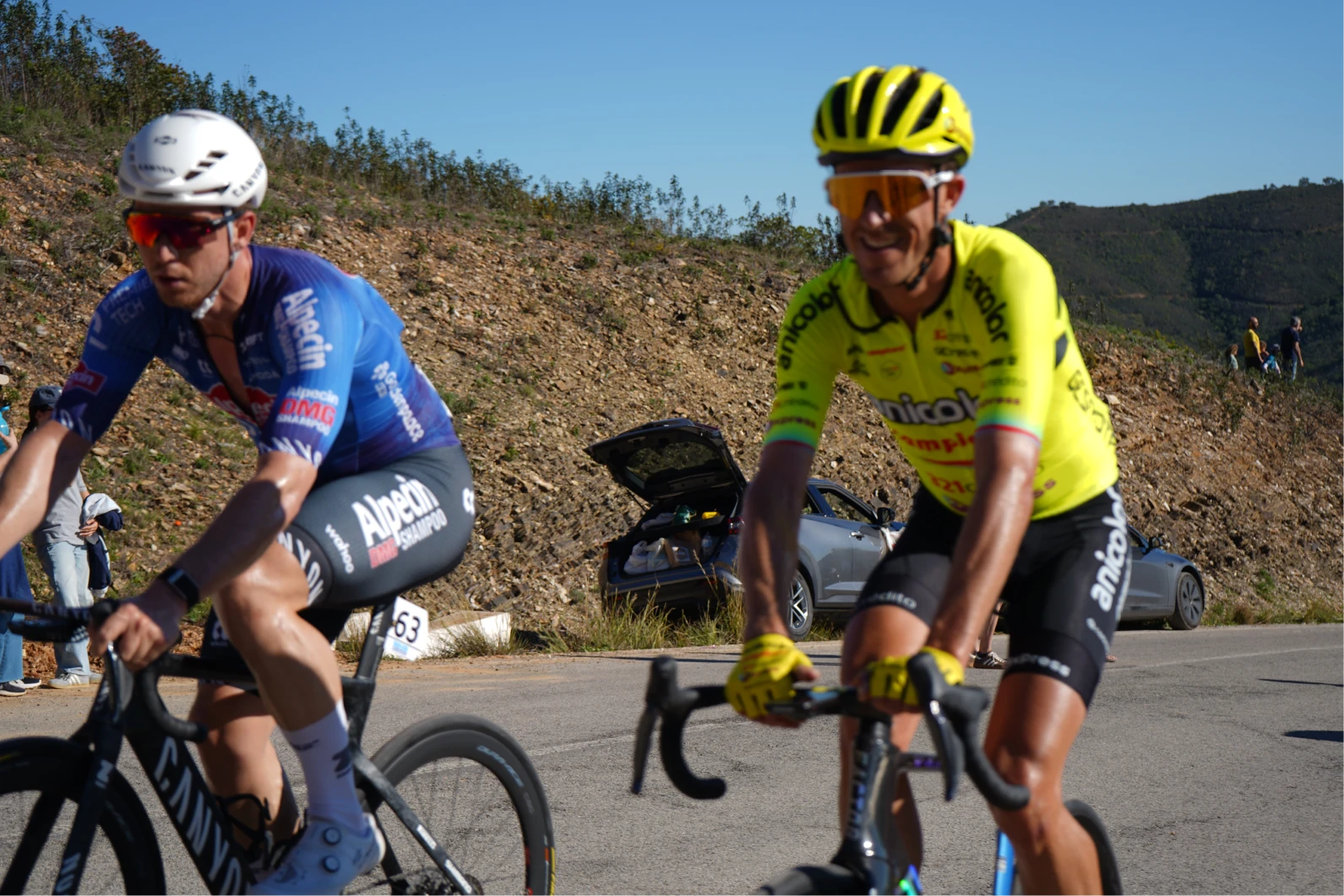
In those few seconds, Alto do Malhão feels like the centre of the cycling world. And yet, to someone unfamiliar with the sport, it would seem almost absurd. Hundreds, thousands of people gathered in the middle of nowhere in the Serra Algarvia on a Sunday afternoon, waiting hours to watch cyclists pass at high speed for no more than a handful of seconds.
And still, they come.
They come because Malhão is not just a climb. It is a ritual.
It is over. Barriers begin to fold. Grills cool down. Flags are lowered. Caravans start their engines one by one. Some will drive seven, eight, nine hours back home. But for a few hours on that narrow strip of asphalt, they were exactly where they wanted to be.
For those who know, it makes perfect sense.